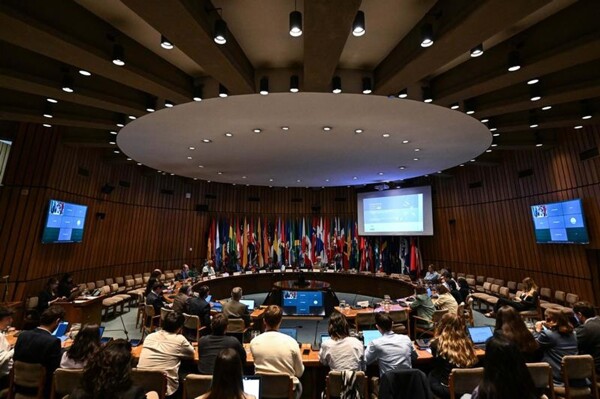
The Latin American Symposium on Gastrointestinal Oncology (SLAGO) is a key regional scientific event focused on gastrointestinal cancers. Created in 2007 by a group of specialists who share the conviction that oncology in Latin America requires its own evidence, contextualized discussions, and decision-making aligned with local realities—both biological and economic—SLAGO has become a forum for scientific update with a Latin American identity.
SLAGO is consolidated as a scientific forum focused on gastrointestinal oncology from a Latin American perspective, recognizing that the biological patterns of diseases, responses to treatments, and access to therapies differ significantly from those observed in the United States, Europe, or Asia. Led by Symposium President Dr. Jorge Gallardo, it is a space where global innovation is analyzed in light of the region's biological, economic, and social realities.
With its focus on the clinical, biological, and structural challenges of Latin America, and just weeks before its scheduled dates, SLAGO is profiled as one of the most relevant scientific meetings of the year in the region. In an environment where innovation is advancing at great speed, the symposium reaffirms that thinking collectively from the region remains a strategic necessity.
One of SLAGO's distinctive features is its genuinely multidisciplinary approach. The academic program will integrate advances presented at ASCO, ESMO, and ASCO Gastrointestinal, as well as the most recent results from clinical trials that could modify clinical practice in the short term, always under a critical analysis of their applicability in health systems with limited resources.
For example, gastric cancer in the region presents distinct therapeutic responses, reinforcing the need to include Latin American patients in international clinical trials. In addition to medical oncology, the symposium will incorporate gastrointestinal oncological surgery, with discussion tables between surgeons and oncologists on neoadjuvant therapy in gastric cancer, new surgical strategies in liver cancer, and emerging topics such as liver transplantation in selected scenarios.
To these are added parallel symposia on onco-geriatrics, psycho-oncology, oncology nutrition, oncology nursing, and palliative care. Dr. Gallardo also emphasized that the high cost of innovative therapies poses complex decisions, where the incremental benefit must be carefully evaluated against its economic and population impact. Recent examples in gastric, colorectal, and pancreatic cancer—including immunotherapies, targeted therapies, combinations with chemotherapy, electric fields, and organ preservation strategies—will be analyzed from a critical perspective, considering real benefit, appropriate patient selection, and regional feasibility.
SLAGO 2026 expects to exceed 800 attendees, with specialists from almost all of Latin America. Dr. Gallardó stressed that while SLAGO is not a political forum, issues of inequity, access to treatments, and sustainability are always present. The meeting will be 100% in-person, maintaining the tradition of being held in Chile, although there is growing interest in holding it in other countries in the region in the future.