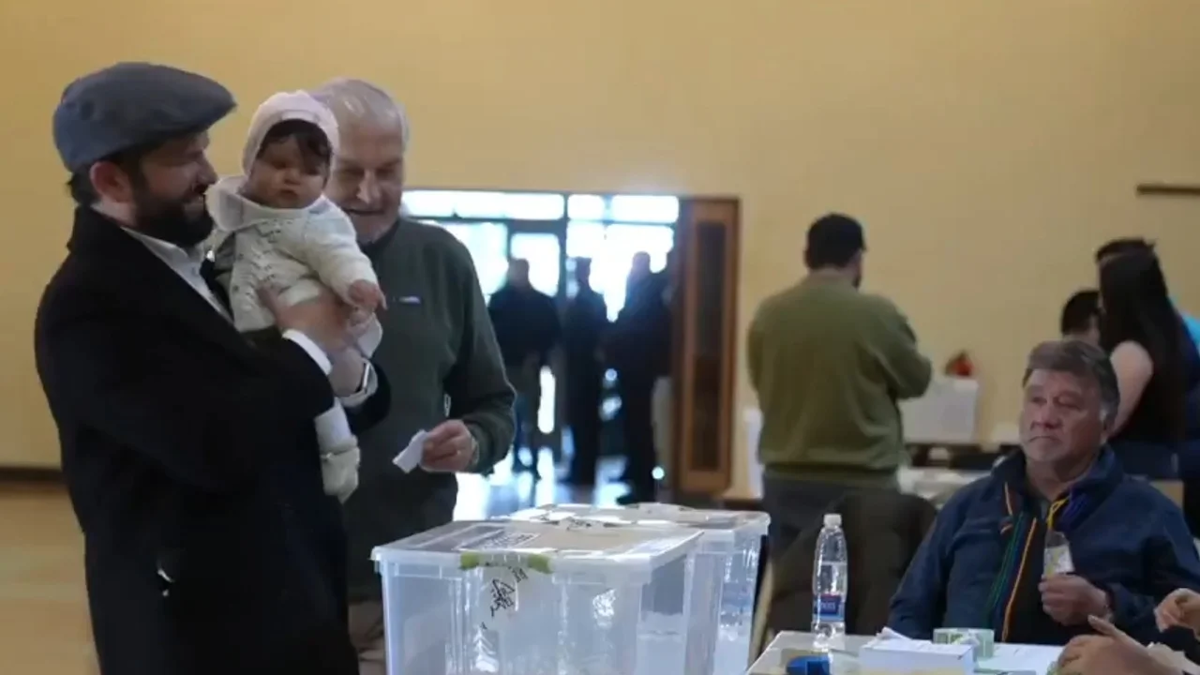
Local and international analysts agree that the election could mark a turn to the right after a progressive cycle that began in 2022, in a context of social fatigue with politics and frustration over the failed constituent process. In addition to choosing a president, Chileans are renewing Congress with simultaneous parliamentary elections, which makes the day's result even more relevant: whoever reaches the first magistracy will have to govern with the balance of forces that emerges from these polls. The electoral reform that reinstated compulsory voting seeks to reverse the decline in participation registered in previous elections and could push millions of voters who had remained on the sidelines of politics back to the active rolls. In total, eight candidates are competing to reach La Moneda: Franco Parisi (People's Party), Jeannette Jara (Unity for Chile, the officialdom's candidate), Marco Enríquez-Ominami (Progressive Party), Johannes Kaiser (National Libertarian Party), José Antonio Kast (Republican Party), Eduardo Artés (Proletarian Action Party), Evelyn Matthei (Let's Go Chile), and the independent Harold Mayne-Nicholls. The president emphasized that Chile is “like a family” that must remain united beyond “legitimate differences” and vindicated the importance of massive participation at the polls as a minimum floor for democratic coexistence. This Sunday's elections are the ninth presidential ones since the return to democracy in 1990 and are held under a system of compulsory voting for the vast majority of citizens over 18 years of age, one of the most relevant institutional changes of recent years. Santiago de Chile, November 16, 2025 – Total News Agency-TNA-In a day marked by political polarization and high electoral expectations, Chilean President Gabriel Boric went to vote in his native Punta Arenas accompanied by his daughter Violeta, in a scene charged with generational symbolism that sought to reinforce a message of national unity amid a heated campaign and a fierce dispute for the country's direction. Before casting his vote in the presidential and parliamentary elections, Boric recalled his own childhood as a potential voter and drew a parallel between those days and the present. The spectrum ranges from a traditional and progressive left to a hard right and a libertarian space trying to capitalize on social discontent. The campaign was dominated by three main axes: public security, the crisis derived from irregular immigration, and doubts about the speed of economic recovery. Both the right and the most conservative sectors have tried to link the increase in crime and the presence of transnational criminal organizations with Boric's management and his coalition, while the ruling coalition defended the social reforms put in place, while promising gradual adjustments in terms of public order. In parallel, candidacies like Parisi's seek to capitalize on voters disenchanted with traditional parties, appealing to an anti-political discourse focused on economic management. In this context of a tight contest, the image of the president voting with his daughter became one of the most visible gestures of the day. Boric insisted that, regardless of the result, the priority must be to take care of the rules of the game and respect the will expressed at the polls, in a message that sought at the same time to calm the nerves of an intense campaign and shield the institutionality against eventual post-electoral tensions. He explained that just as his father took him to the polls, today he does the same with his daughter, whom he defined as part of the generation for which they are trying to “strengthen the democracy of the future”. No candidate appears with a clear capacity to surpass 50% of the vote in the first round, so all scenarios point to a runoff on December 14 between the two most-voted tickets. From the ruling coalition, they bet that compulsory voting will expand their base beyond the hard core of support for Boric, while in the commands of Kast, Kaiser, and Matthei—the three best-positioned right-wing figures in the polls—they trust that discontent with insecurity and the rise in the cost of life will push a punishment vote capable of tipping the balance in their favor.