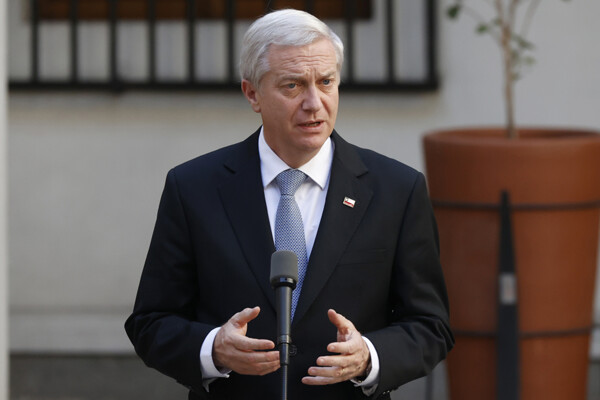
The far-right José Antonio Kast won the Chilean presidential election, defeating the leftist Jeannette Jara by a wide margin of nearly 20 percentage points, with 57.4% of the votes counted, according to figures from the Electoral Service. Both candidates were vying to succeed the progressive Gabriel Boric at La Moneda, the seat of government, in a historic runoff marked by the highest voter turnout in Chile's history, due to the implementation of compulsory voting for the entire census. "This is a huge difference in the political project I represent," added the 51-year-old lawyer and public administrator. Jara showed herself convinced that she can defy the polls, defeat her rival in the presidential runoff, and boasted of her achievements as Minister of Labor during the current Boric administration. Boric praises the Chilean electoral system. One of the first to vote was the President of the Republic, Gabriel Boric, who from his hometown of Punta Arenas, at the southern end of the country, urged the population to defend democracy and praised the speed and reliability of elections in Chile. "Democracy is the best tool we have to settle the differences between Chileans peacefully, with dialogue, with agreement. Nobody questions the results in elections in Chile," added the president. In Santiago, the official spokesperson, Camila Vallejo, assured that the handover of power to the next Administration will be carried out in accordance with Chilean institutional tradition, regardless of who is the winner. "Rest assured that the handover in our government will be smooth, republican, safeguarding the democratic tradition that has prevailed in all changes of government in democracy," she added. "Chile is one," she emphasized. "In our country, we have an electoral system that is an example and a pride for the region and the world." More than 15.7 million people were called to the polls. The leader of the Republican Party is leading the count in almost all of the country's 16 regions, including leftist strongholds such as Valparaíso and the Metropolitan Region, which houses the capital. Kast will be the first leader identified with Pinochetism to reach La Moneda in democracy and will receive the presidential sash on March 11 from Boric, his rival in the 2021 elections, in which he lost by a wide margin. More than 15.7 million Chileans were called to the polls due to the compulsory nature of the vote, reinstated in 2022 and which for the first time applies to a presidential runoff. Kast promises to 'govern for all' and Jara does not give up. The candidate who voted earliest was Kast, who promised to 'govern for all' if elected. "If today we were elected as a team, we will be very clear that we are a team at the disposal of all Chileans, beyond political differences," Kast said after casting his vote in the rural commune of Paine, alongside his wife, María Pía Adriasola, and one of his nine children. The former ultra-Catholic deputy, who is running for La Moneda for the third time (2017 and 2021) and has based his campaign on promising a hard line against crime and irregular migration, also promised to have 'the best relations' with neighboring countries and in particular with Milei, whom he praised and with whom he said he shares 'dreams,' strategies, and policies. At the other end of the city, in the commune of Conchalí, the leftist and former minister Jeannette Jara criticized the 'obstructionist opposition' that Kast's Republican Party has made these four years to the government of Gabriel Boric and asked the far-right for a 'responsible' opposition if she is the one who finally wins. "The public policies that I implement will be oriented towards the common good, the general well-being of the population and not of a few."