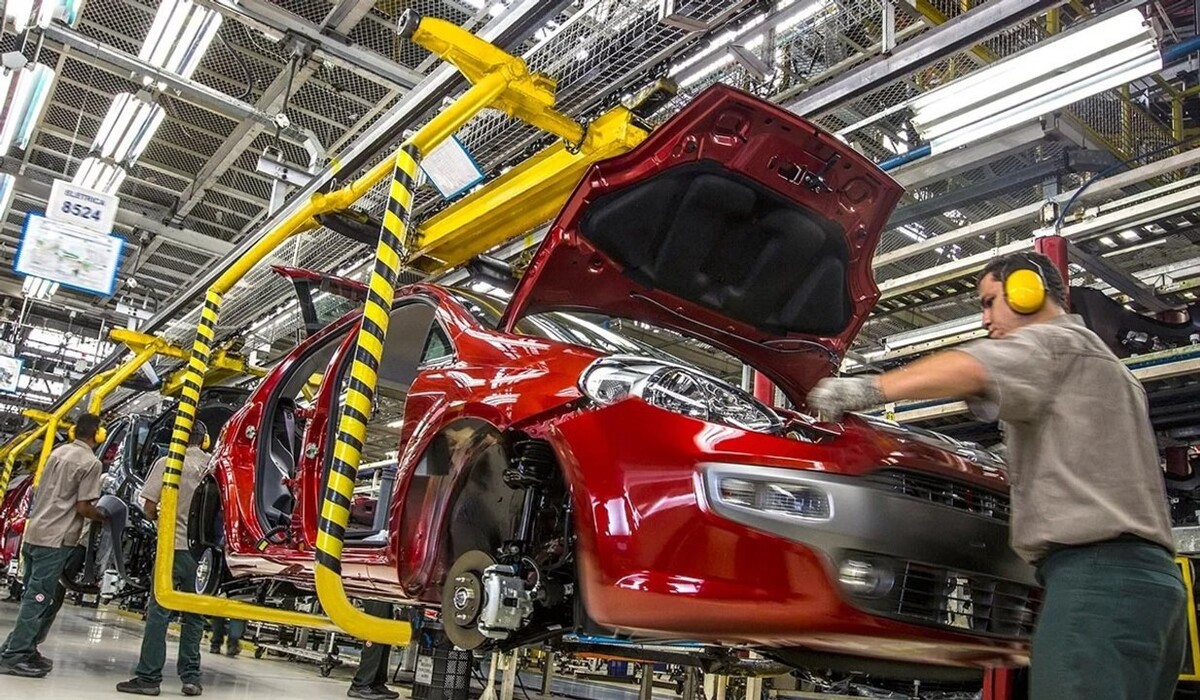
The United States' tariff policy has affected foreign direct investment (FDI) flows to Latin America and the Caribbean, especially in sectors with a strong export orientation towards the North American market, according to a report released by the Economic Commission for Latin America and the Caribbean (ECLAC). The report 'International Trade Prospects for Latin America and the Caribbean 2025', launched at ECLAC's headquarters in Santiago, Chile, states that there is 'evidence that the uncertainty generated by changes in the United States' trade policy is impacting FDI flows to the region.' 'This uncertainty discourages projects aimed at supplying the US market,' said ECLAC Executive Secretary José Manuel Salazar-Xirinachs. The document noted that in the first half of 2025, announced FDI projects in the region totaled $31.374 billion, 53% less than in the same period of 2024 and 37% below the average for 2015-2024. There were sharp annual drops in the amount of project announcements in several sectors with an export orientation to the US, including the automotive sector, which fell by 76%, auto parts by 87%, industrial equipment by 48%, consumer products by 65%; and metals and minerals by 65%, the high-ranking official added. Lower Tariffs in the US ECLAC stated that although countries in the region face, on average, lower tariffs in the US than some of the country's main trading partners, the applied tariffs are around 10%. Following announcements made by US President Donald Trump, the highest average tariff falls on Brazil (33%), followed by Uruguay (20%) and Nicaragua (18%). Meanwhile, Mexico has received an average effective tariff of 8%, which is explained because most of its exports enter that market tariff-free, either by adhering to the Treaty between Mexico, the United States and Canada (USMCA) or by not being included in the hikes. In this scenario, ECLAC recommended Latin American and Caribbean countries to promote 'opportunities for trade reduction in favor of the region's exports, in sectors such as clothing, medical devices, and agribusiness.' The multilateral body urged nations to 'deepen their trade relations with partners such as China, the European Union, India, the Association of Southeast Asian Nations (ASEAN), the Gulf Cooperation Council, and the African Continental Free Trade Area.' It also called for strengthening regional integration in areas such as infrastructure, trade facilitation, and regulatory convergence. Instrumentalized Interdependence In an era of 'instrumentalized interdependence,' ECLAC also asked countries to avoid adopting measures that could increase uncertainty, in a context marked by 'major disruptions and geopolitical tensions in world trade.' Regarding the region's trade performance this year, the report indicated that the value of the region's goods exports from Latin America and the Caribbean will grow by 5%, similar to the 4.5% recorded in 2024. The projected expansion is explained by a 4% increase in the volume exported and a 1% rise in prices. Meanwhile, regional imports will increase by 6%, due to a 7% increase in volume and a 1% drop in prices. Among the region's main trading partners, exports to China are expected to record the largest increase in value in 2025, at 7%, driven by higher sales of meat and soybeans, and by higher copper and other mineral prices. Shipments to the European Union would grow by 6% and to the United States by 5%, the entity projected. While for intraregional trade, growth of around 1% is expected.