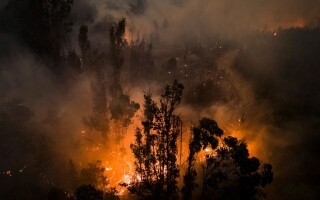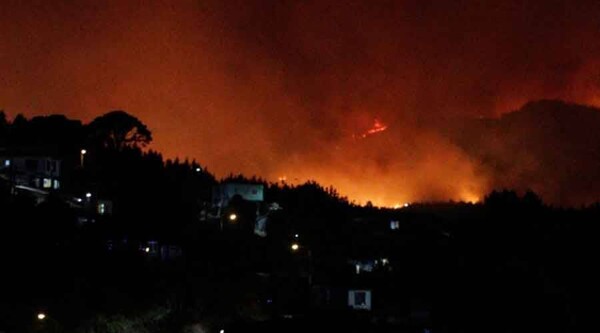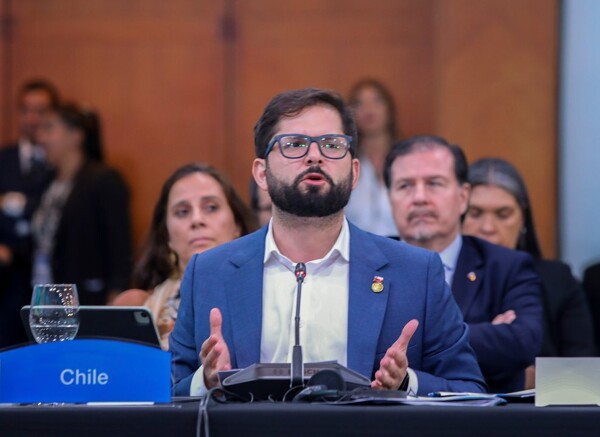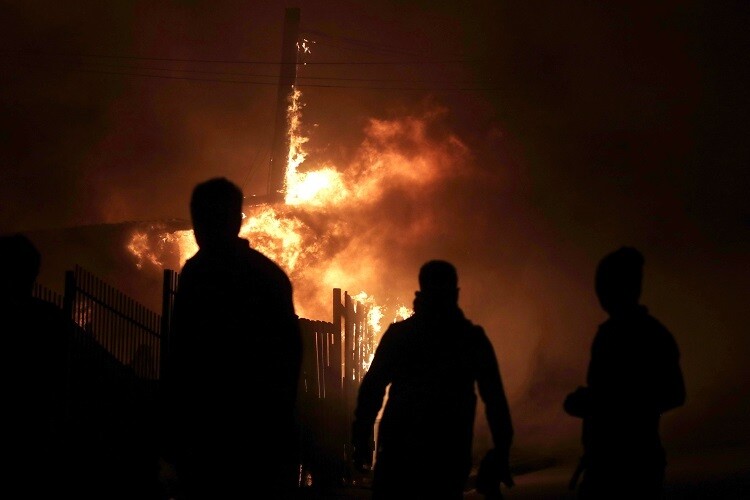
The director of the National Disaster Prevention and Response Service (Senapred), Alicia Cebrián, lamented on Sunday: "We have faced very adverse conditions." Due to its abrupt topography, extensive forests, and climate, Chile has always had wildfires, but their frequency and intensity increased after 2010. According to experts, the climate crisis, a megadrought lasting over a decade, and the expansion of the so-called "urban-rural interface" (areas where combustible vegetation and buildings mix) have contributed to this. The major turning point was marked by the 2017 fires, which consumed nearly 600,000 hectares in the central-south regions of O’Higgins, Maule, and Biobío, and forced a change in the scale used to measure wildfires. However, the greatest tragedy related to fire in Chile occurred in February 2024 in the Valparaíso region, when flames killed 136 people. "Today, the focus must be on fighting the fires, assisting those affected, and supporting authorities to face this emergency," added Kast, who will take office in March and will announce his cabinet this week. Governor of the Biobío region, Sergio Giacaman, where 16 of the victims died, said that "it is a catastrophe as serious as the one in 2010 with the earthquake," one of the greatest tragedies Chile has experienced, which devastated the country's south. The regional director of the National Forestry Corporation (Conaf) Biobío, Esteban Krause, confirmed in an interview with a local medium that the wildfire affecting the Penco sector has preliminarily burned about 5,000 hectares. In Ñuble, the latest report sent by Conaf records a total of nine fires, which have consumed more than 4,000 hectares. Since Saturday night, weather conditions have been adverse for fighting the fires. In addition to high temperatures, the phenomenon known as "Puelche wind"—a dry and warm wind that blows from the Andes Mountains towards the valleys and the coast—has complicated firefighting efforts because it causes a rise in temperature and a drop in humidity. "These are people who have been found at the deployment site of the fire," indicated Cordero, who detailed that in the early morning "a little over 87-88 SAE (Emergency Alert System) alerts" were dispatched to the neighbors of the area. One of the areas most affected by the fires, which began on Saturday and have so far forced the evacuation of 30,000 people, is the commune of Penco, in the Biobío region, about 500 kilometers south of the capital. President Gabriel Borich declared a State of Catastrophe in the affected areas this Sunday and will travel to the site "to take direct knowledge of the situation in order to reinforce the measures that have been adopted so far," reported the Minister of the Interior, Álvaro Elizalde. A total of 16 people were killed by several wildfires in southern Chile, in the Ñuble and Biobío regions, reported this Sunday the Minister of Public Security, Luis Cordero. The head of state also suspended his agenda for Monday. The elected president, José Antonio Kast, stated in a message on X that "at this critical moment of the emergency, there is no room for politics."