«Inflation is under control, but growth is moderate», warned EFE Carlos Smith, of the University of Development.
An admirer of Luiz Inácio Lula da Silva and José Mujica, Boric has always had more political capital outside than inside the country, mainly thanks to his forceful condemnation of Venezuela, Cuba, or Nicaragua, which has distanced him from other progressive Latin American leaders.
«Boric also chose a democratic path and built bridges with the opposition to pass laws that improve the lives of Chileans. This was more valued abroad than at home because it coincided with a global process of right-wing radicalization», added Heiss.
«Boric 2.0?»
Boric will hand over power on March 11 to his nemesis: the former deputy José Antonio Kast, who lost to the progressive four years ago and will become the first far-right and Pinochetist president in a democracy.
Kast's victory, according to Arello, «cannot be explained without a government that did not put the main citizen concerns at the center».
«The main challenge for the left in Chile and the world is not to be perceived as parties of the academic elite, who know what needs to be done but do not have the support of the streets», stated Dammert.
Boric will leave power at 40 years old, and although he has not made public what he will do from Wednesday, there is a consensus among analysts that he still has a long political career ahead and that perhaps in four more years, he will aspire to La Moneda again.
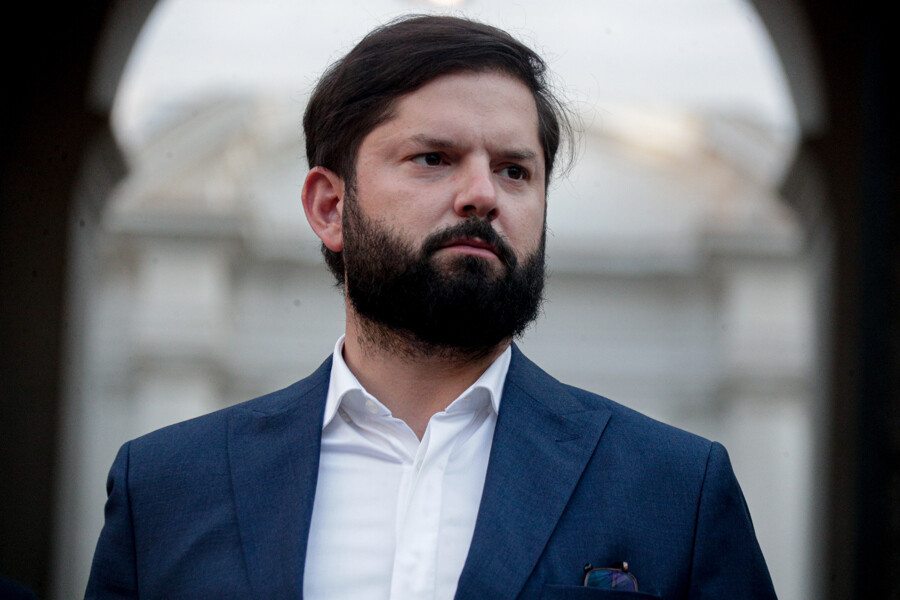
Photo EFE
From promising the end of neoliberalism to moderation: Boric's four years in Chile
This entry was first published in La Verdad Panamá.
«If Chile was the cradle of neoliberalism, it will also be its tomb»: this is how a young Gabriel Boric promised four years ago profound reforms to the system established during the dictatorship and announced the arrival of power of a new left highly critical of the social democracy that governed in the transition.
Days before leaving La Moneda, the leader of the Broad Front closes a term that began with symbols and great expectations and ends with some social advances, but with many of his promises unfulfilled.
At just 36 years old, the former student leader became Chile's youngest president and came to power surrounded by his fellow university fighters, enveloped by the demands for change expressed in the 2019 protests and with the support of the Communist Party and the traditional forces of the center-left.
He will leave La Moneda with a constant approval rating (30%) and with the general feeling that he has not managed to solve the main citizen concerns: crime and economic slowdown, according to polls.
«Boric made an inadequate reading of the priorities of Chileans and the moment the country was going through, which, after the explosion, was not looking for abrupt changes», indicated to EFE Rodrigo Arello, of the University of Development.
«He received a country with a social, economic, and political crisis unprecedented since the return to democracy and managed to stabilize it», meanwhile told EFE Claudia Heiss, of the University of Chile, who believes that the main errors «are related to inexperience, especially at the beginning».
His great defeat
His honeymoon was short-lived, and six months later he received what many consider the hardest blow: in September 2022, a left-wing proposal to change the Constitution, in force since the dictatorship and which gives the State a secondary role, was widely rejected.
The constitutional change was the basis of his program, and after the defeat, he sacrificed some of his university colleagues—such as the doctor Izkia Siches, dismissed from the powerful Ministry of the Interior—and gave more weight to the traditional center-left.
«He will be remembered as a government that arrived with a refounding project and ended up following a more social-democratic line», affirmed Arello.
For Lucía Dammert, a sociologist from the University of Santiago and who was the head of Boric's advisors during those first months, «Chile changed before the eyes of a government that could not be 100% in tune».
«Citizens demanded things that historically are not at the center of the left's attention, such as security», added to EFE Dammert.
Another of his most resounding defeats was the rejection in Congress of an ambitious tax reform with which he sought to finance his social agenda.
Better image abroad than at home
Despite not having a parliamentary majority, Boric managed to pass laws such as the 40-hour workday, the increase in the minimum wage to almost 600 dollars, the mining royalty, and a partial pension reform, which allowed pensions to be increased by 35% and which is possibly his most valued achievement.
«His main economic legacy is to deliver a normalized economy after the explosion and the pandemic».