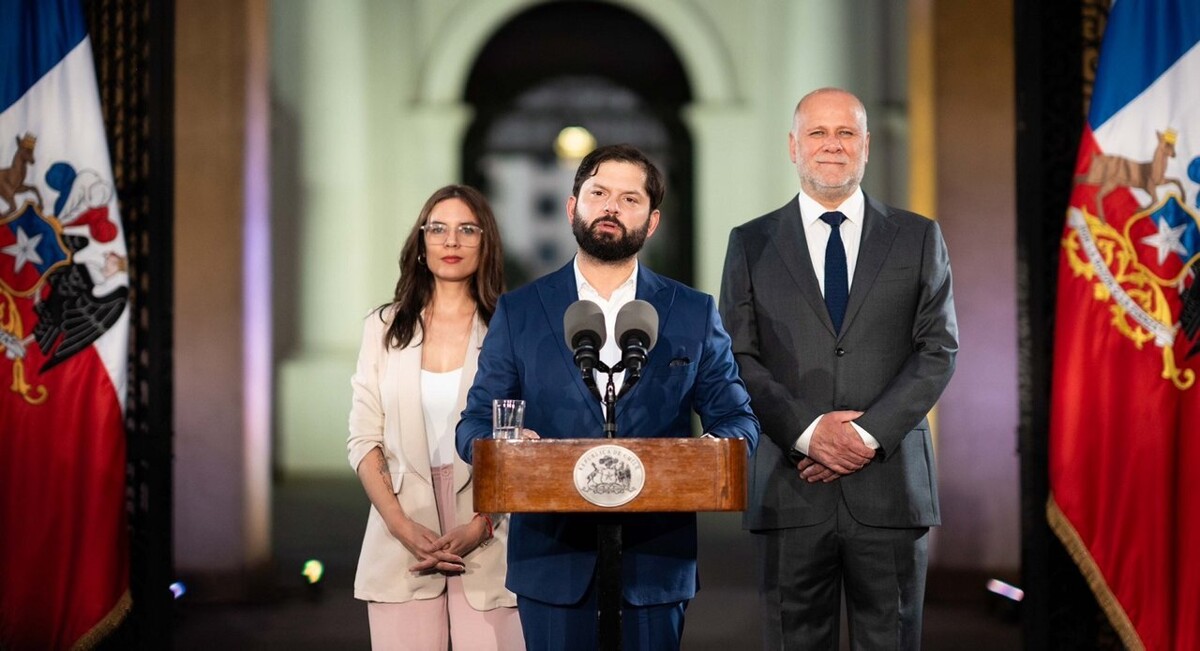
Chile will vote for its next president on December 14th in a runoff between the communist militant and official left-wing candidate, Jeannette Jara, and the far-right leader of the Republican Party, José Antonio Kast. Both candidates, winners of last Sunday's first round of elections, have less than a month to campaign to secure new votes and form agreements for the upcoming elections, as reported by the Argentine News Agency. "Jara's situation is complex," political analyst and University of Talca academic Mario Herrera told Xinhua. The former Minister of Labor and Social Security under current Chilean President Gabriel Boric secured a plurality of votes in the first round with 26.85%, but the result was lower than expected by her sector, which had projected a vote share above 30%, as Jara represented the transversal left. According to Herrera, the left-winger "has little political space, but she does have electoral space," so she must now win over undecided voters and those who supported less popular candidates in the first round. Meanwhile, on the other side of the political spectrum, former deputy Kast came in second among the presidential candidates with 23.92% of the vote, emerging as the winner among three right-wing contenders. According to experts, the sum of the votes from right-wing candidates gives Kast a "solid foundation" for the runoff, backed by the conservative and anti-progressive government electorate. "We already know how many left-wing voters Jara has; that was settled in the first round. She now needs to appeal to the center that didn't vote for her and rally the undecided. On the other hand, Kast has the support of the other two right-wing candidates who were eliminated, which gives him an advantage," stated political scientist Beatriz Araya. During Sunday's election day, the big surprise was the high vote count for populist economist Franco Parisi, founder of the People's Party (PdG), who was running for president for the third time and garnered 19.71% of the ballots. "Polls underrepresented Parisi. Most sample frames were developed in regions where Parisi did not perform well, so it was more of an unmarked voting intention than a hidden vote," explained Herrera. In his view, the key to Parisi's success was "abandoning the left-right axis" and opting for the "elites-citizenship axis," a discourse that earned him over 2.5 million votes, mostly concentrated in northern Chile and some southern localities. Along those lines, political scientist Nicolás Freire stated that "there is a 20% vote share for this populist candidate, with an electorate that is rather angry but not ideologized. We have to see where these votes go, who winks at them." A decisive factor in these elections was the debut of the mandatory voting system with automatic registration for adults, which led to an increase in citizen participation. According to Chile's Electoral Service (Servel), 13.45 million people turned out to vote in the first round of presidential and parliamentary elections, representing 85.4% of the registered electorate.