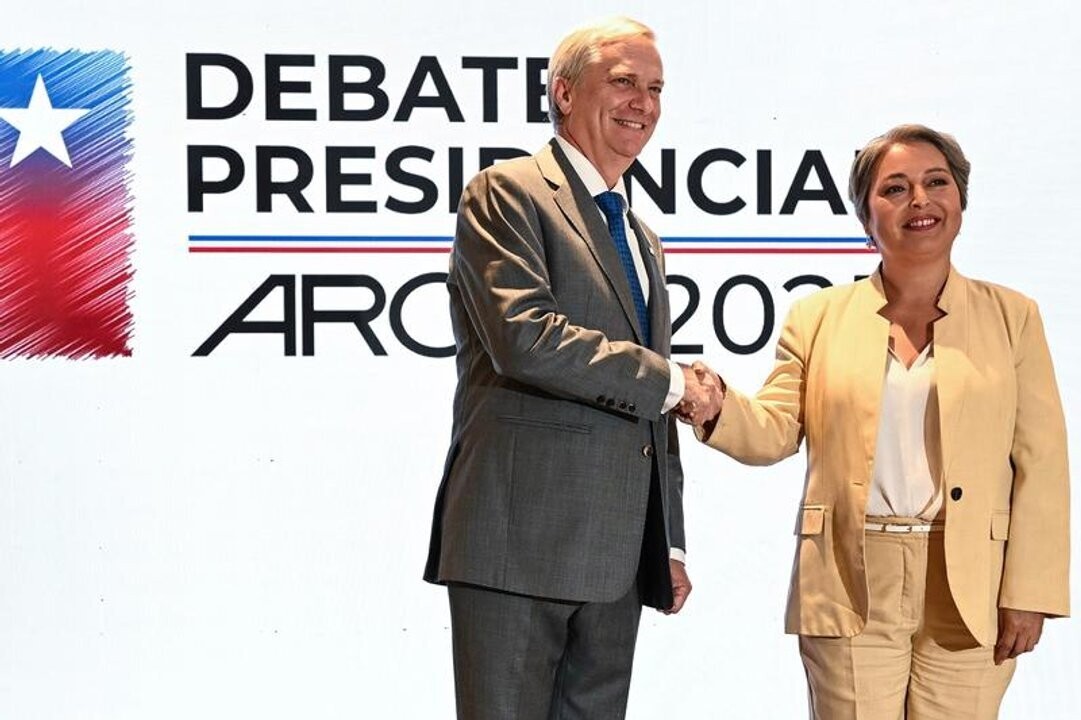
Chile enters the final week of its presidential runoff campaign, which will be held this Sunday, December 14, to define the next president between far-right candidate José Antonio Kast and the officialist candidate Jeannette Jara. Both candidates are seeking to capture the crucial votes from the center and from those who were eliminated in the first round after the general election on November 16, according to the Argentine News Agency.
The Challenge of Winning the Center
In the first round, the candidate from the Communist Party and the officialist bloc, Jeannette Jara, won with 26.85% of the vote, while the leader of the Republican Party, José Antonio Kast, obtained 23.93%. This tight difference of less than three points creates a scenario of high uncertainty. Chilean law imposes a blackout on polls 14 days before the election, so public opinion is based on the last surveys published in early December. These gave Kast a lead, potentially surpassing 50% of the voting intention, although the campaign teams are now focused on mobilizing compulsory voters and getting first-round abstentionists to the polls.
A Shift Towards Moderates
The final stretch of the campaign has been characterized by efforts from both aspirants to moderate their rhetoric, seeking to attract voters from parties that did not make it to the runoff. José Antonio Kast, known for his hardline stance on security and migration, has tried to expand his base of support by gaining endorsements from Chile's traditional right, including figures who previously competed in the primary. Jeannette Jara has sought the support of the center-left and voters who do not feel represented by the far right, emphasizing social and economic proposals. Local experts point out that the key to this election will be the ability of both to moderate their image and convince citizens about their viability of governing in a deeply fragmented Chile.
"Local experts point out that the key to this election will be the ability of both to moderate their image and convince citizens about their viability of governing in a deeply fragmented Chile".
The margin of victory could have significant effects on future governance, as a narrow difference could mean a stronger opposition and a more complex mandate for the winner. The December 14 runoff will determine the next president of Chile, who will assume office for the 2026-2030 term.